Part of Figures of Fascism and Antifascist Solidarity
Full program


Eszter Salamon
Sommerspiele
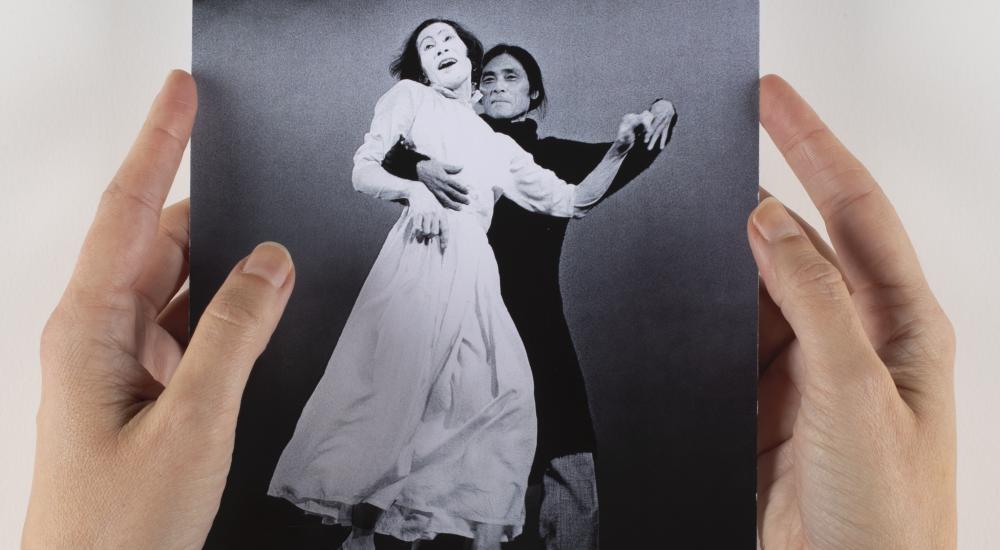
Met Sommerspiele verkent Eszter Salamon op filmische wijze geschiedenis en herinnering. Centraal staat het leven en werk van de Duitse avant-gardistische danseres en kunstenaar Valeska Gert, meer bepaald in de context van de Olympische Zomerspelen van 1936 in Berlijn.
Tegen de achtergrond van nazi-architectuur en in navolging van Valeska Gerts gebruik van het groteske, legt de film tekortkomingen van het collectief geheugen bloot. In een combinatie van autobiografie, historische feiten, kunsthistorische verwijzingen en speculatie, omarmt Sommerspiele het potentieel van performance en cinema. Zo roept het poëtische én politieke empathie op die de tijd kan overstijgen. Door een transnationale en feministische lens te richten op zowel verleden als heden, reflecteert de film over de heropleving van fascisme vandaag.
De voorstelling maakt deel uit van Figures of Fascism and Antifascist Solidarity. Klik hier voor het volledige programma.
• Eszter Salamon is kunstenaar en performer. Ze woont en werkt in Berlijn en Parijs. Momenteel is ze promovendus aan de Nationale Kunstacademie in Oslo. Sinds 2001 creëert ze solowerken, grootschalige performances, films en performatieve en filminstallaties, die wereldwijd worden gepresenteerd in podiumkunstencentra en musea. Haar multidisciplinaire werk bevindt zich op het snijvlak van lichaamsbeweging, stem, tekst, muziek, bewegend beeld, documentaire en fictie.
director Eszter Salamon | voice and performance Eszter Salamon | director of photography Marie Zahir | editing and story advisor Minze Tummescheit | colour grading and special effects Arne Hector | sound design and mixing Christian Obermaier | assistant director João Carvalho | additional images Ashton C. Green, Minze Tummescheit | assistant camera Viola Zichy, Loup Deflandre, Greta Markurt Gaffer Eli Börnicke, Janne Ebel, Katja Rivas Pinzón, Elisa Daniel | sound recordist Manuela Schininà, Donata Schmidt-Werthern, Marina Funck, Arne Hector | electrician Ashton C. Green, Elisa Daniel, Harebell Suzuki, Nikita Znak, Mica Dans, Victoria Bergmann, Sol Astolfi, Héctor Calderon | drone operator Andrea Schmidt, Anne Misselwitz | set assistant Javier Blanco, Santiago Doljanin, Marilou Fiévet Best Boy Arne Weiß | catering Matthias Halke, Mašiko | post-production supervisor Minze Tummescheit Foley Artist Carsten Richter Foley | mixer Hanse Warns Foley | editor Helene Seidl | vocal coach Johanna Peine | camera and sound equipment flockefilm GmbH, Florian Brückner, Maier Bros., Camelot | broadcast services Foley Stage Studio Warns | vocals recording Mariia Mias at Viktoria Studios Berlin | postproduction Studio cinéma copains | production Botschaft GbR / Alexandra Wellensiek, Studio ES / Elodie Perrin, Institute of Speculative Narration and Embodiment | production manager João Carvalho | production assistant Héctor Calderon, Laura Gönczy, Sonja Schreiber, May Dugast | supported by the NATIONAL PERFORMANCE NETWORK - STEPPING OUT, funded by the Federal Government Commissioner for Culture and Media within the framework of the initiative NEUSTART KULTUR. Assistance Program for Dance, KHiO - Oslo National University of the Arts | funded by Berlin Senate Department for Culture and Community, the Regional Directory of Cultural Affairs of Paris – Ministry of Culture and Communication, French Ministry for Culture - DGCA (Direction Générale de la Création Artistique) | research residency at Mille Plateaux, La Rochelle | special thanks to Verwaltung Olympiapark Berlin, Sommerbad Olympiastadion, Waldbühne Berlin / Ananda Siegling, Akademie der Künste, Svea Immel, Christoph Fey / Von Have Fey Rechtsanwälte, Bojana Cvejić, Lívia Páldi, Franziska Kollinger, Agnes Kern, Paola Yacoub Song „Vorbei“ (Rolf Marbot / Bert Reisfeld / Mauprey AJ) © Meridian Editions. Courtesy of Edition Marbot GmbH
— The Reappearances series relates in various ways to the following works by Valeska Gert: Humoreske (1916), Modedame (1917), Pause (1920), Kupplerin (1920), Laster (1920), Orgasmus (1922), Clown (1922), Versammlung (1931), Schlummerlied (1950s), and Grüsse aus dem Mumienkeller (1926), as well as anecdotes and thoughts articulated in her autobiographical book Ich bin eine Hexe. Kaleidoskop meines Lebens (1968). Some of the performative elements in the film were developed after a series of works called The Valeska Gert Monuments: the sound installation Love Letters to Valeska Gert (2016) by Eszter Salamon, as well as the performances The Valeska Gert Museum (2017), and The Valeska Gert Monument (2017), both created in collaboration with artist and performer Boglárka Börcsök.
Tickets