Join the Army of Dignity
Each season, we give one (or more) artists in the programme carte blanche. We ask them to submit a text, essay or other contribution that relates to the season’s overarching theme, the artist’s performance, or a reflection on the performing arts… For Sep26–Feb27, our final nomadic season, theatre maker Chokri Ben Chikha wrote the text below: a call to all those approaching their 18th birthday to sign up for the Army of Dignity.
Join the Army of Dignity
Open letter to all almost 18-year-olds
28/04/2026
Ministry of Humanity ;
Department of Dignity
Dear young person,
Congratulations: next year you will turn 18.
This is no small moment. You are coming of age on a continent that is the cradle of freedom, human rights, the rule of law, and civilization. Europe has beautiful words for them. Belgium does too. We love values. We print them on websites, in policy documents, in speeches, in schoolbooks, and - when necessary - in solemn letters to young people who will soon turn eighteen.
You received such a letter from the Ministry of Defence.
It stated that you will soon turn 18, that this is an important step in your life, that you can participate in a voluntary military program, and that people hope “you can be counted on to help make a difference for our country” (letter from Defence, voluntary military service year, 2025).
That is lovely!
A government that speaks to you personally. A state that sees you. A country that says: young person, you matter, you can serve, you can contribute, you can make a difference.
That is moving.
You may even have already attended an information session. On 19 November 2025 in Ghent, Defence organized the first info day for the voluntary military service year. Approximately 700 young people gathered there, almost all of them of your age. Defence hopes that ultimately 1,500 young people will enrol, of whom a selection will actually begin the training.
That is how a system works: visible, organized, persuasive. And safe.
Because let us be honest: safety is important. The world is dangerous. There are wars, threats, drones, migration flows, cyberattacks, disinformation. We know that.
Fortunately, we have leaders.
Leaders who warn. Leaders who identify patterns even before ordinary citizens know a pattern exists. For instance, the Minister of Defence declared that there were drones flying in formation over Belgium, using techniques that supposedly came “straight from the Russian handbook.”
It later turned out that one of the images did not show a drone, but a police helicopter. We know that now, too.
Because in times of threat we must be quick. And those who are quick sometimes see more than there is. Or something different from what is there.
But the feeling is there.
And that is often enough.
When feeling triumphs over fact, the boundary of truth shifts.
Rule of law
In the field of asylum and migration, the State also demonstrates impressive flexibility in dealing with reality.
The government has been condemned thousands of times because they failed to provide people with the shelter they were legally entitled to. Judges imposed fines. And the minister declared that she does not want to pay them because it does not suit her politically.
The judiciary reacted sharply: judicial rulings are binding for everyone, including the government. Failure to implement them undermines the rule of law.
That is clear.
And at the same time: apparently also open for discussion.
Everything is under control so far.
Technology
And then there is something else.
Not alongside all of this.
But through it.
Something that works faster than ministers.
Faster than judges.
Faster than you.
Something that determines what you see.
What you hear.
What you believe.
Technology.
Not as a tool.
But as an environment.
You live in a world where algorithms determine what is visible. Where social media not only show what exists, but help determine what seems important. Where technology not only disseminates information, but organizes emotions.
The systems of companies such as Meta (Mark Zuckerberg), X (Elon Musk), Google (Sundar Pichai), and OpenAI (Sam Altman) help determine what you see, what you believe, and how quickly you react.
Systems in which anger goes faster than nuance.
In which fear scores better than truth.
In which simplicity triumphs over complexity.
We know that, too.
Ten years ago Nick Bostrom, a Swedish philosopher and director of the Future of Humanity Institute at the Oxford Martin School, warned that we needed to endow machines with human values.
Today we see something else happening.
Not the machine without values.
But the human being who is losing his human values.
As Bas Heijne describes it (NRC, 24 April 2026): it is not technology that dehumanizes us, but the people who build and use it increasingly show contempt for human dignity.
Tech entrepreneurs speak openly about society as a system that needs to be reprogrammed. About people as data. About deviation as error. About dissenting voices as noise.
When humanity becomes a system, the measure of a person disappears.
And suddenly the world changes.
Not visibly.
But fundamentally.
We are not only afraid of enemies.
We begin to see each other as enemies.
A war of all against all.
And you turn eighteen in exactly that world.
Congratulations!
On 4 February 2026, something happened that I can hardly describe as anything other than a revelation.
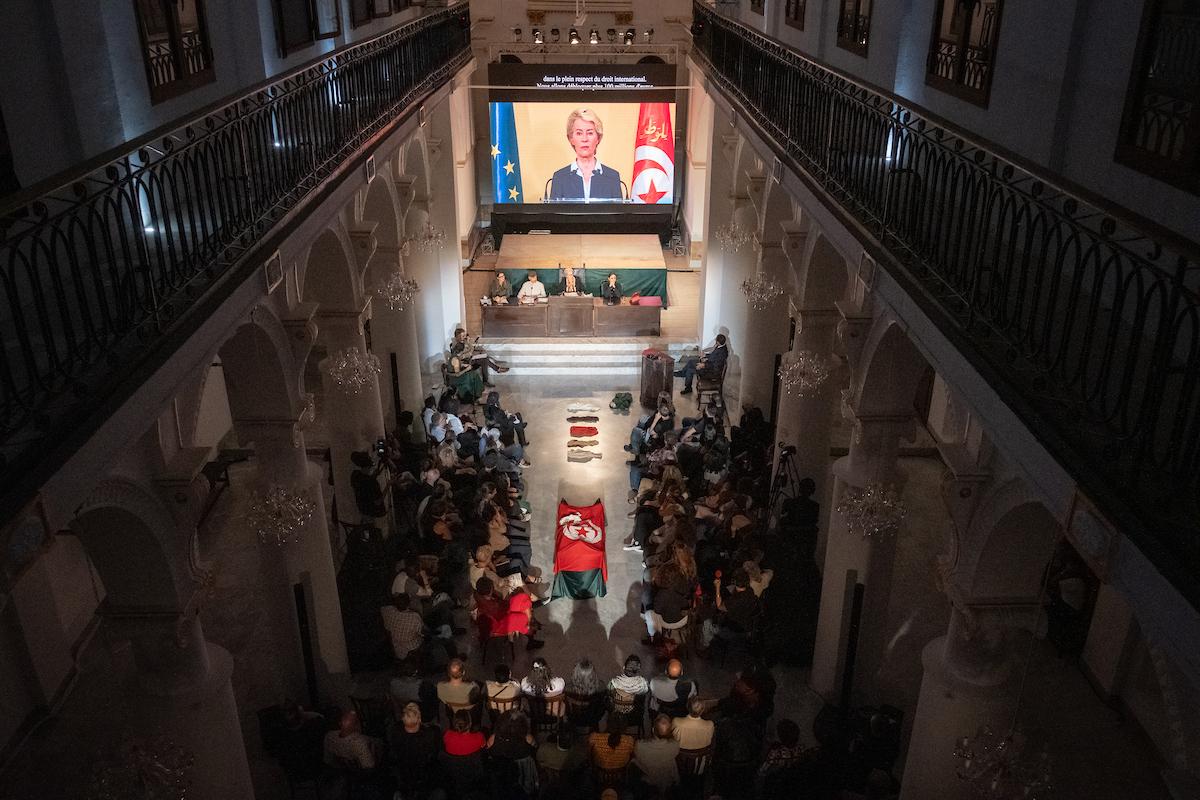
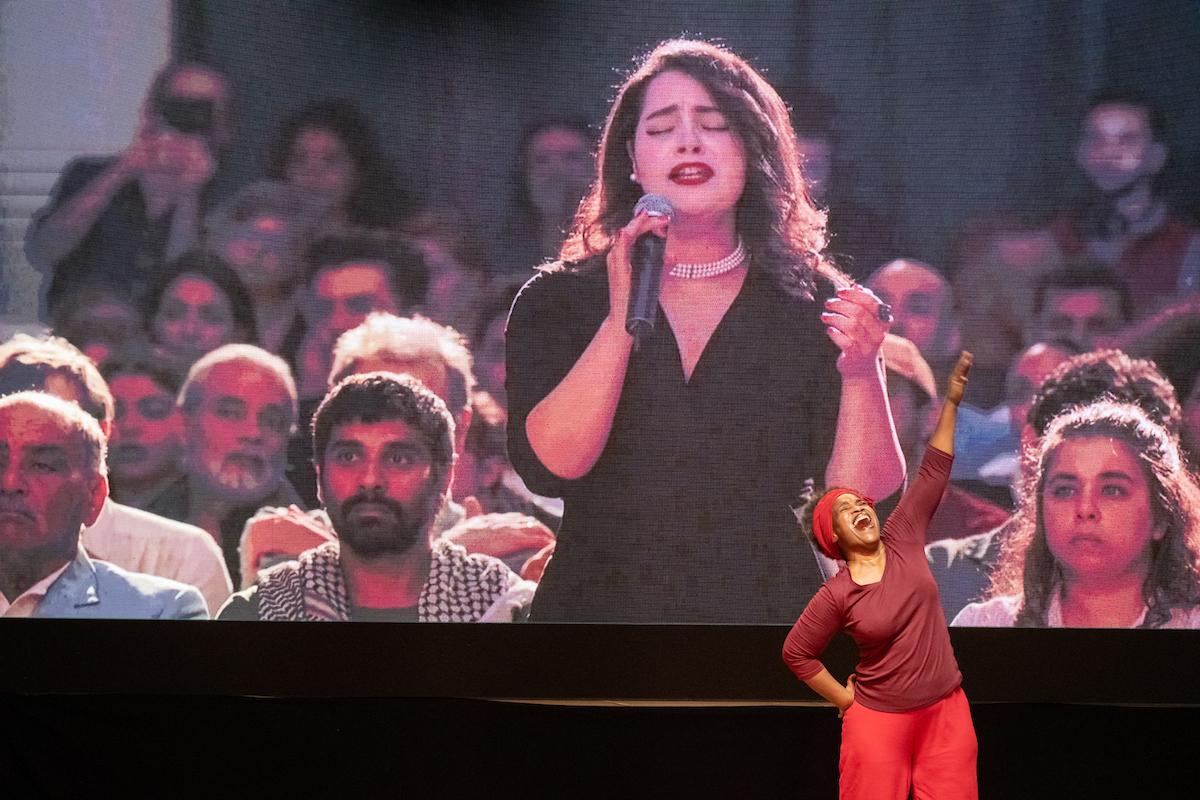
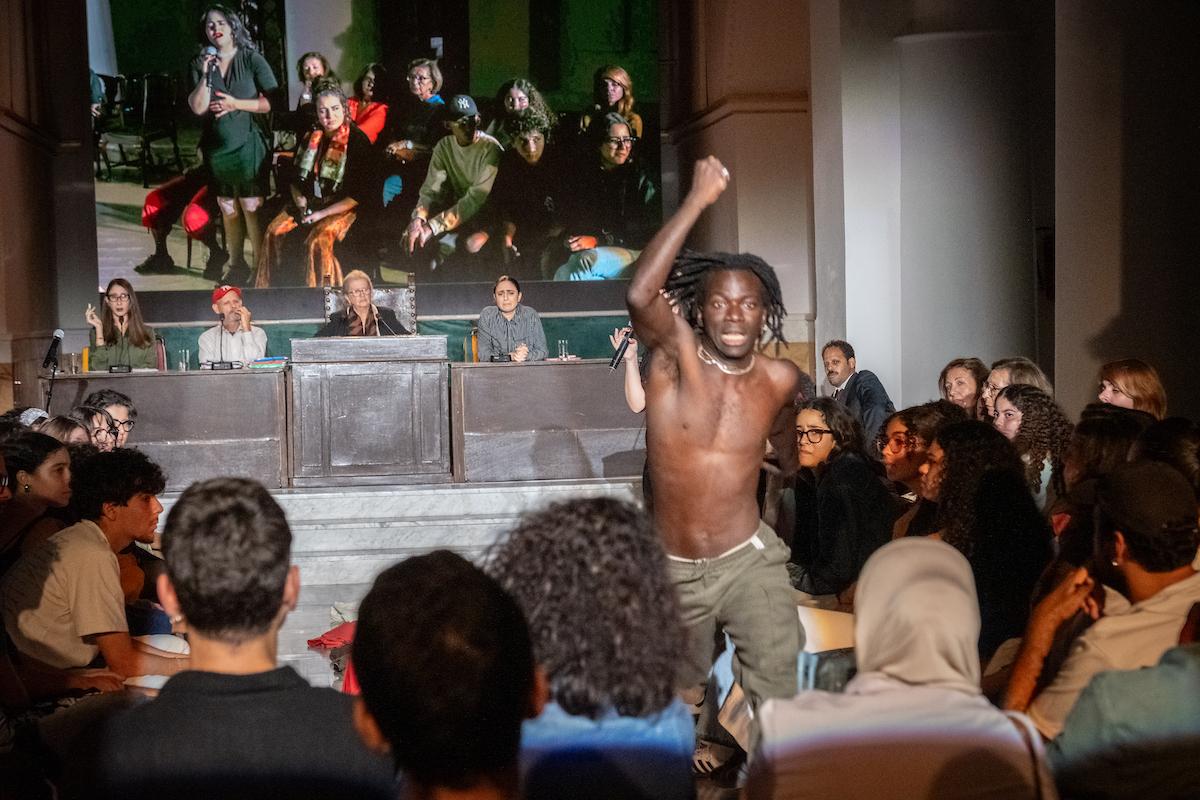
It was as if a light went on. In Ghent, in UFO, a hall at Ghent University, with about 600 young people, all your age. I was invited to help give substance to “The Lesson of the Century”.
Together with historians Gita Deneckere, Koen Aerts, and human right researcher/activist Brigitte Herremans, we engaged in a conversation with these young people about war and imagination. About propaganda and truth. About how societies understand themselves in times of conflict.
We investigated something that is rarely made explicit: that the humanities are not a luxury, but existential conditions for a democracy. That imagination is not an afterthought, but a condition for freedom. That an open society can only exist if citizens can imagine alternative realities.
Without imagination, there is no alternative.
Without an alternative, there is no freedom.
And that is where it happened.
No spectacle.
No slogans.
No ready-made answers.
But young people who thought.
Young people who listened.
Young people who tried to understand.
And then it struck me.
It cannot be a coincidence.
About the same number of young people.
The same city: Ghent.
The same age.
On the one hand, a Defence information day.
On the other hand, a lesson on war, imagination, and democracy.
Two meetings.
Two directions.
On the one hand: learning to react.
On the other hand: learning to understand.
And that has stayed with me ever since.
The Army of Dignity
Something is shifting.
When a minister evokes a threat with images that later turn out to show something else, it is not just about a mistake. In that case, it is about how fear works.
When a minister disregards judicial rulings, it is not just about policy. It is about how rules are disappearing.
When technology determines what you see, it is not just about information. It is about how reality is shaped.
And the same thing happens, again and again.
Gently.
Almost imperceptibly.
Whoever undermines the dignity of another loses his own dignity as well.
When fear takes over from truth.
Whoever undermines the dignity of another loses his own dignity as well.
When rules are applied selectively:
Whoever undermines the dignity of another also loses their own dignity.
When people are reduced to data, problem, risk.
You cannot believe in human rights on Monday and relativize them on Tuesday.
In themselves, these seem like separate facts.
Together, they form a system.
A system in which everything moves faster.
Except for reflection.
A system in which everything becomes more efficient.
Except for humanity.
When speed becomes the norm, the ability to stand still disappears. Habituation is the quietest form of complicity. Look at the ongoing genocides in Palestine, Sudan...
And the most disturbing thing is not that this is happening.
The most disturbing thing is that we are starting to get used to it.
That is why I am writing you this letter.
Not only as a teacher or director, but also as a father.
My son turns eighteen this year. He still believes that the world can get better.
And that is precisely what makes him vulnerable.
Not because he is weak.
But because he has not yet gotten used to it.
The world will teach him to move forward. But if you have to park your conscience to get ahead, you might be driving forward, but not as a human being.
So we must do something else.
Something that sounds absurd.
Something that doesn't fit.
Something that isn't in any policy document.
We must raise an army.
Not an army of weapons.
Not an army of fear.
Not an army of efficiency.
An Army of Dignity.
Yes.
Some might say this is too ‘woke’, haughty and even absurd
But less absurd than:
a helicopter that becomes a threat,
a law that becomes optional,
a human being that becomes data,
a society that becomes a system,
a world that becomes a war of all against all.
What does this mean concretely?
The Army of Dignity is not a training program.
It is a counterforce.
You learn how fear works.
You learn how power works.
You learn how technology works.
You learn that not everything that emerges is true.
You learn that not everything that is decided is right.
You learn that not everything that is efficient is human.
And you learn, again and again:
Whoever undermines the dignity of another loses their own dignity as well.
You learn that dignity is not a luxury.
But a boundary.
What does it provide you?
Not certainty.
But resistance.
Against speed without direction.
Against power without limits.
Against technology without humanity.
You learn that cynicism is not a solution.
Cynicism is weary idealism that has given up.
That is why we invite you.
Join the Army of Dignity.
Info days are scheduled in Oostende and Brussels.
And there are more to come.
Chokri
Volunteer in the Army of Dignity