Playing the Fantasy: a conversation with Luisa Fernanda Alfonso and Estefanía Álvarez Ramírez
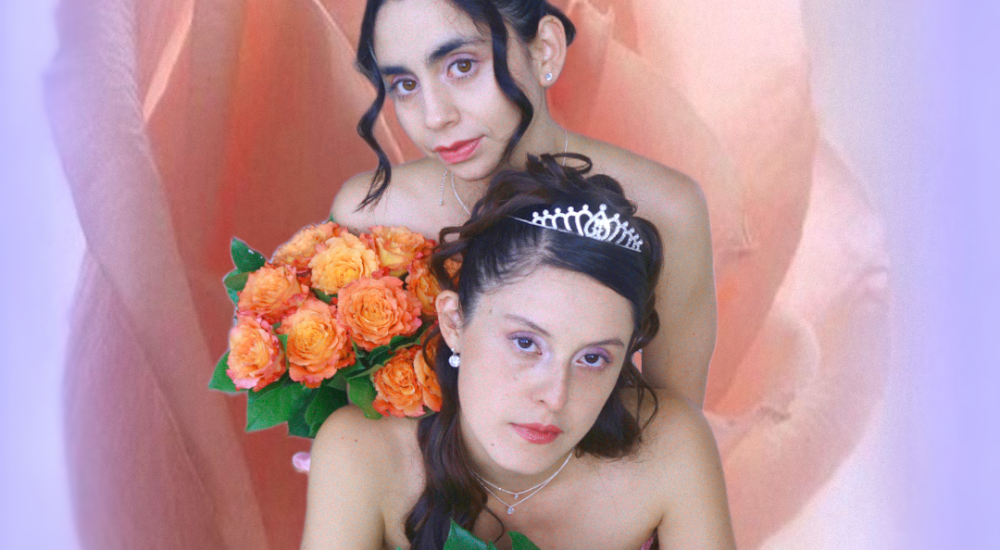
On the 18th and 19th of June Luisa Fernanda Alfonso and Estefanía Álvarez Ramírez are showing their new creation Quinceañeras at Kaaitheater/De Kriekelaar. We chatted with them about their collaboration, rituals, and looked back at some teenage memories.
Could you tell us a bit about Quinceañeras?
Luisa Fernanda Alfonso: The piece is inspired by a Latin American tradition, which is the Quinceañeras parties, a tradition to celebrate when a girl becomes a woman on her 15th birthday. Colombia and Latin America have this very specific and strong ritual that really emphasizes the relationship between girlhood and womanhoodIt’s very sudden, an instant transformation in a way.
Estefanía Álvarez Ramírez: Yes, you're 14 years old and then suddenly you're talking about high heels and makeup and doing your hair and then you arrive to an adult body, and look and feel very different.
Luisa: We were interested on this imposed idea of suddenly being considered a woman.
Estefanía: This idea is an important part of the conceptual frame of the piece, but it is also about friendship, particularly about our friendship and our history of making work for nine years together and finding this context to explore that.
How and when did you start collaborating?
Luisa: We met studying at the BA in Dance at the Folkwang University of the Arts, and we had a very instant and organic connection. Not only from both of us coming from Colombia, but what was exciting for us about dance was an immediate click, and we discovered a mutual passion for movement composition, and this developed into a very playful discovery of an aesthetical world.
Could you share a little bit about the creation process of this piece?
Luisa: We had to draw from a dynamic that we are familiar with, that we've developed for the last 10 years, but we had to find a new methodology. When we arrived to the studio, we decided to go full hands on into movement material and start from a very instinctive place of the references and the worlds that inspired both of us.
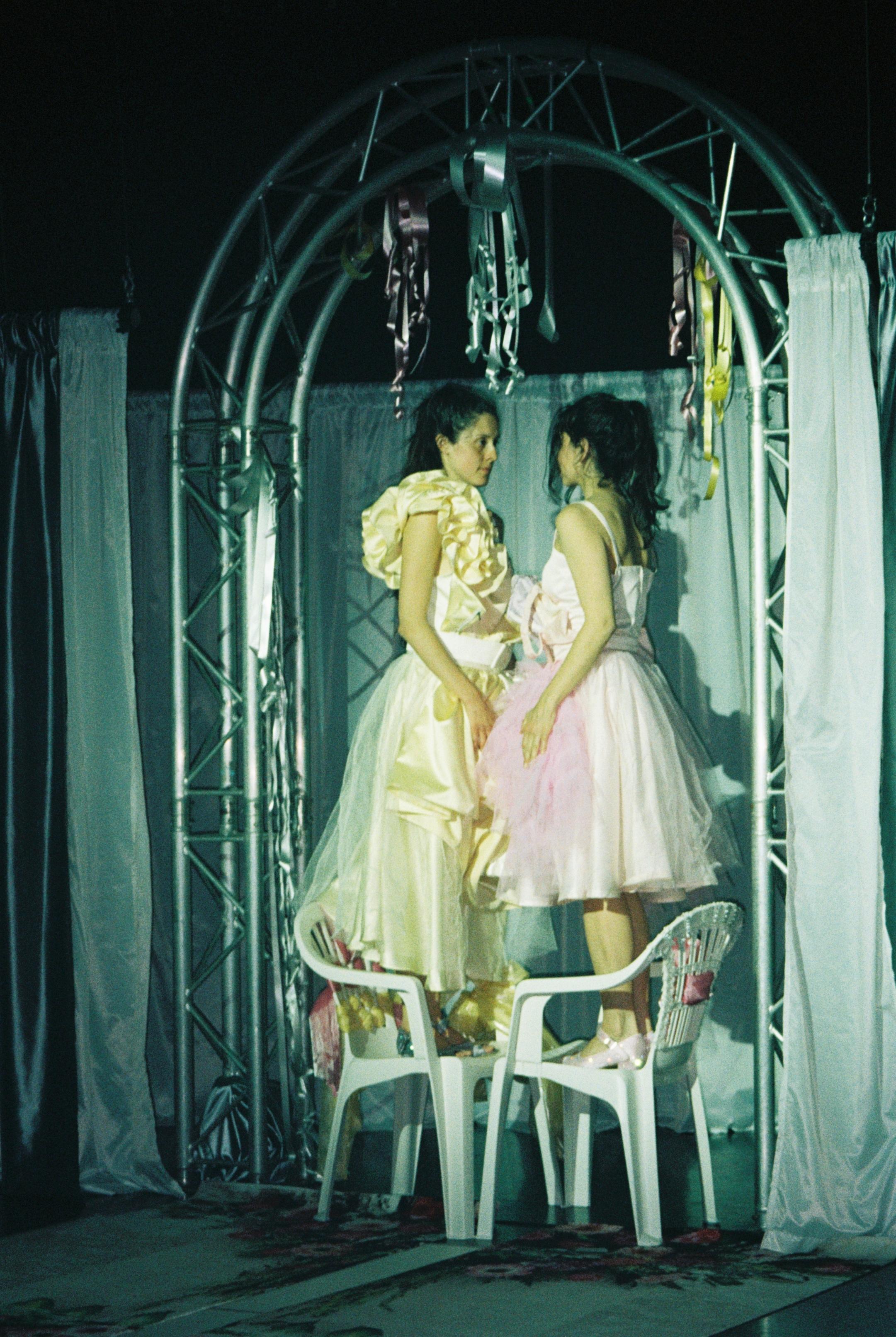
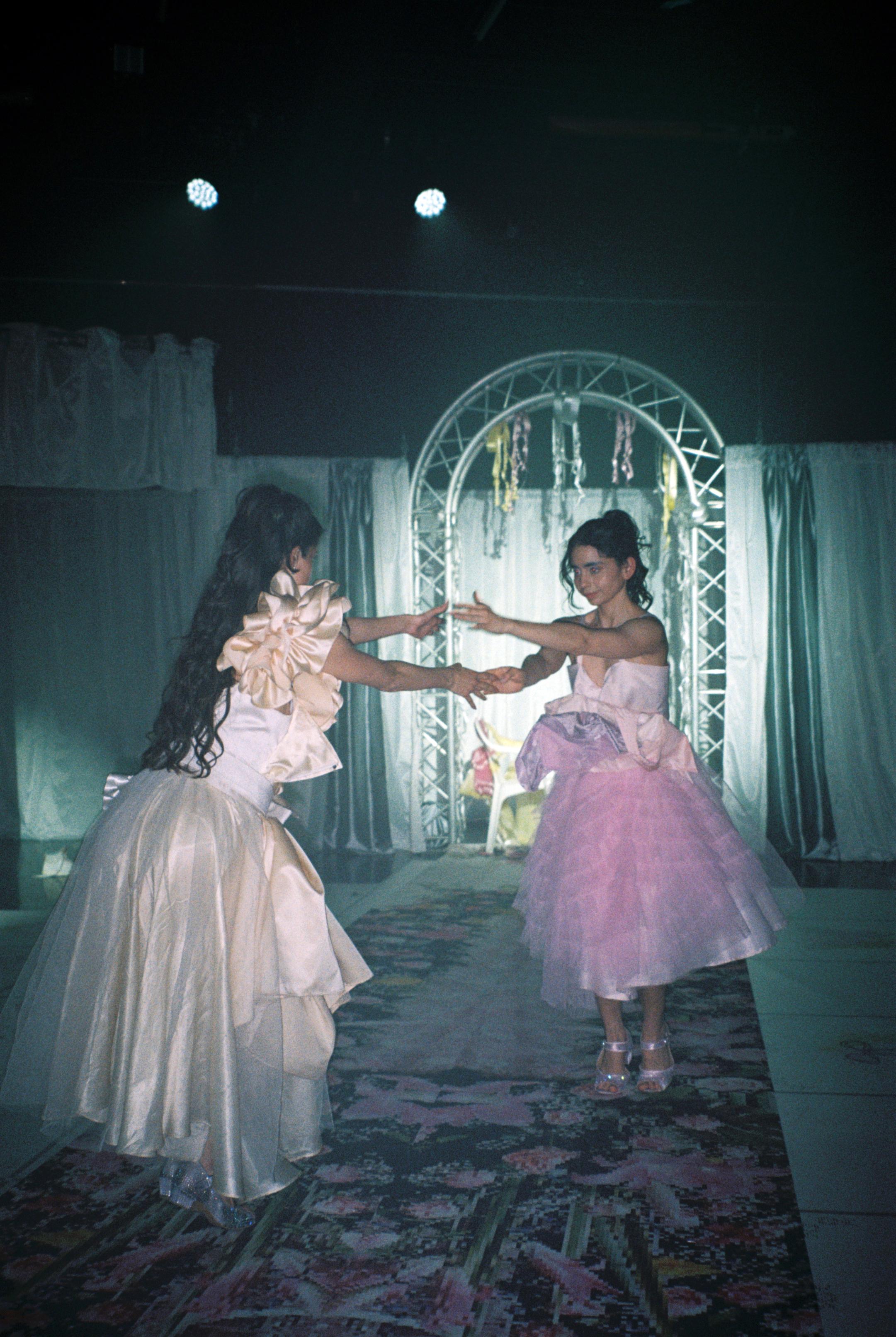
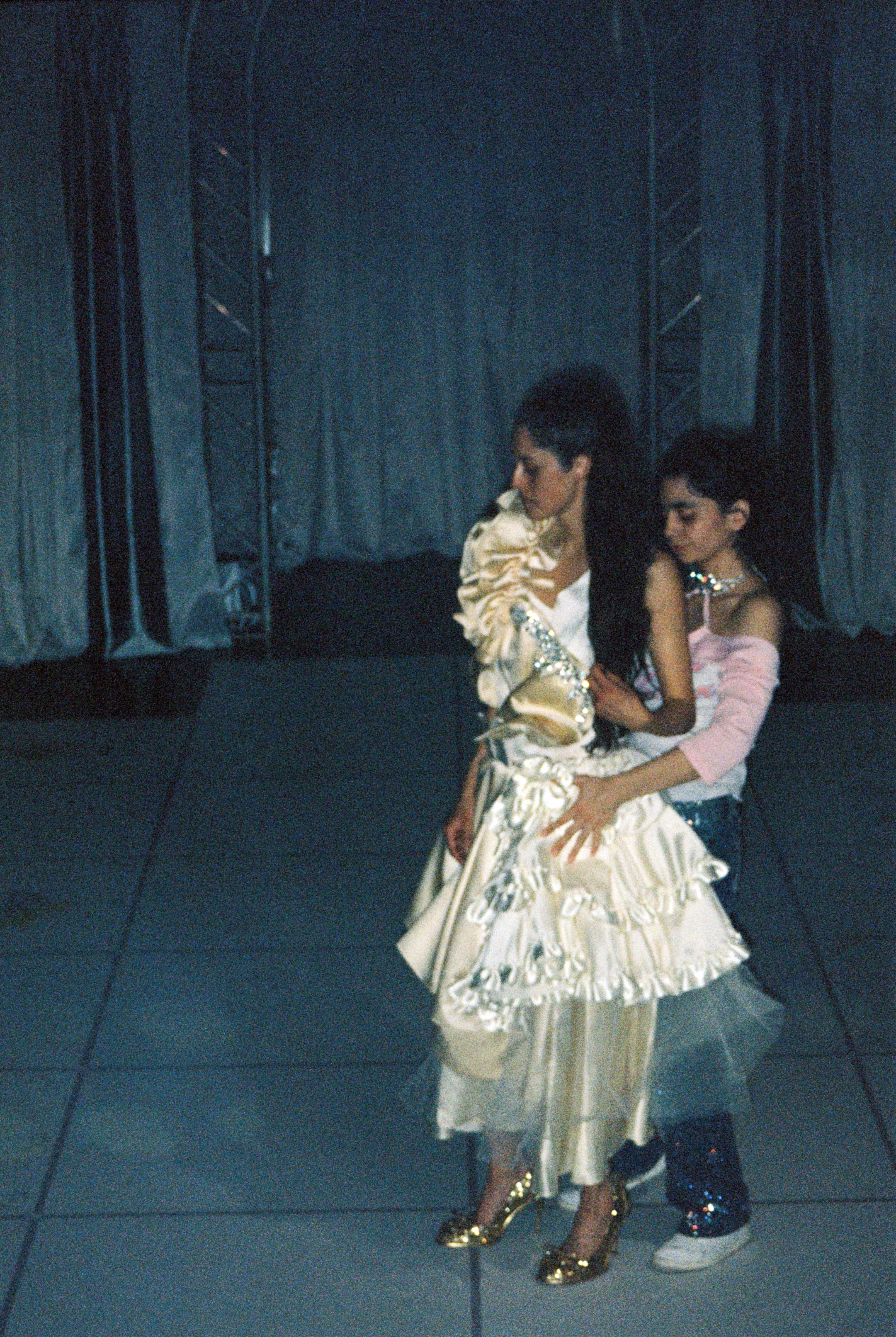
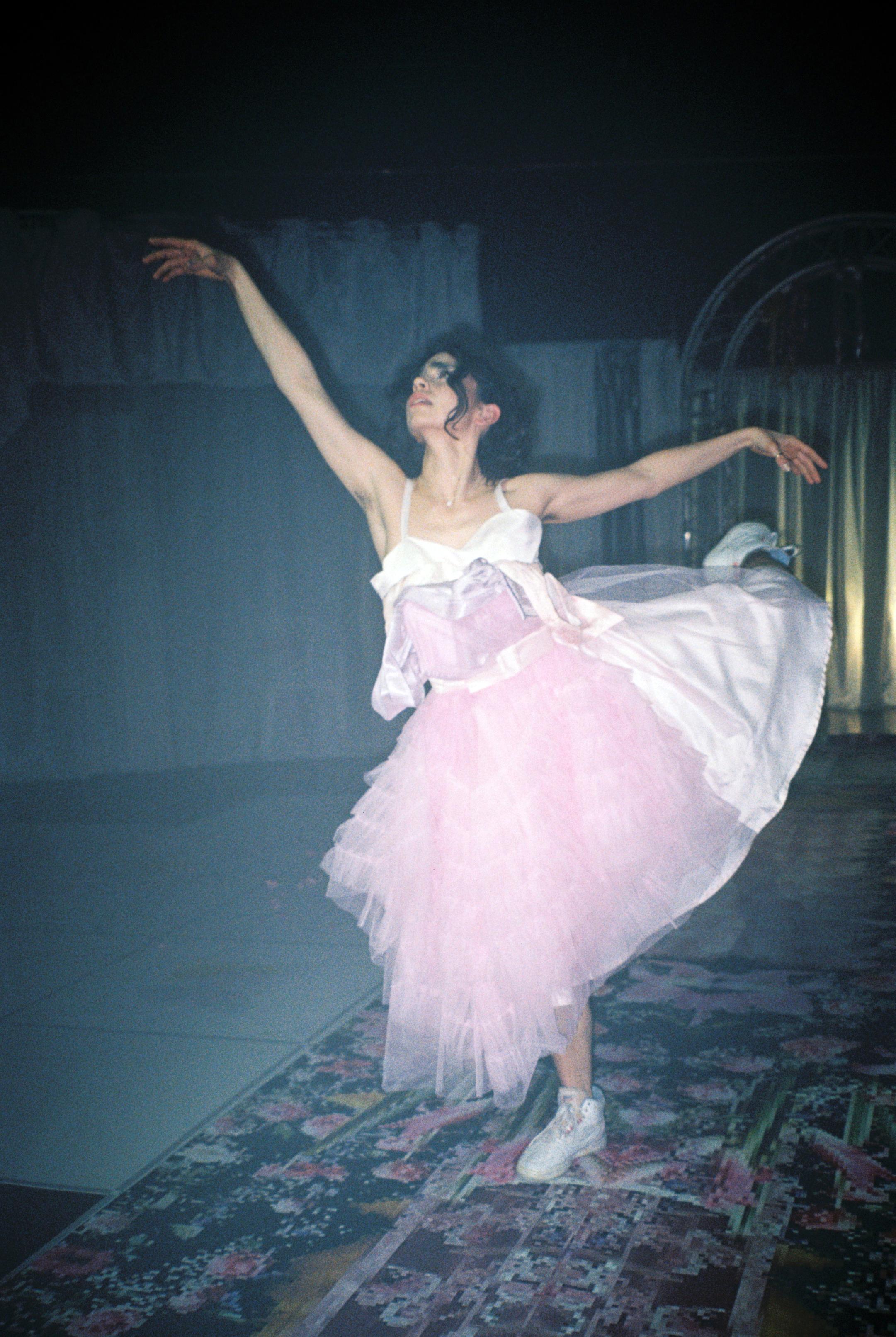
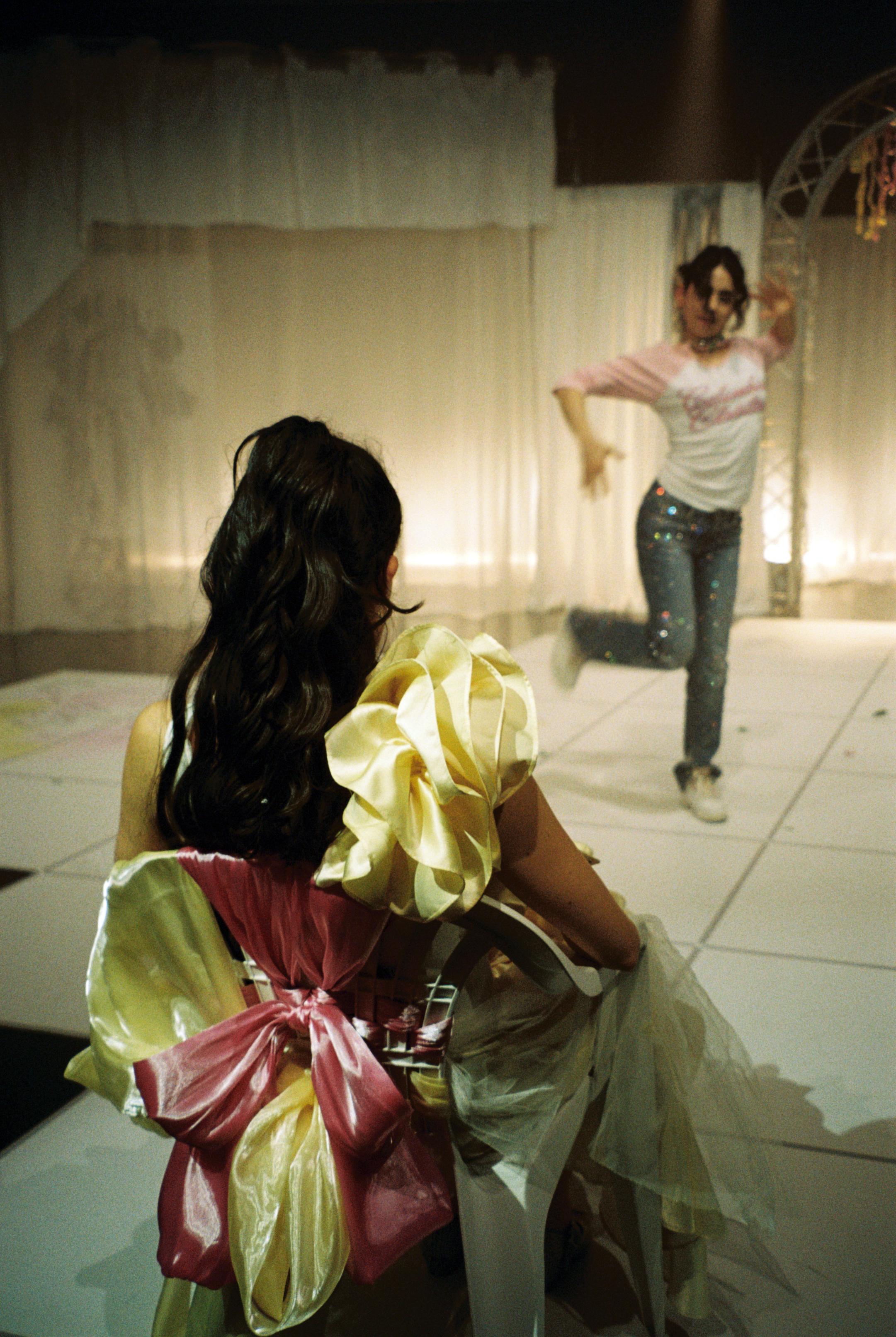
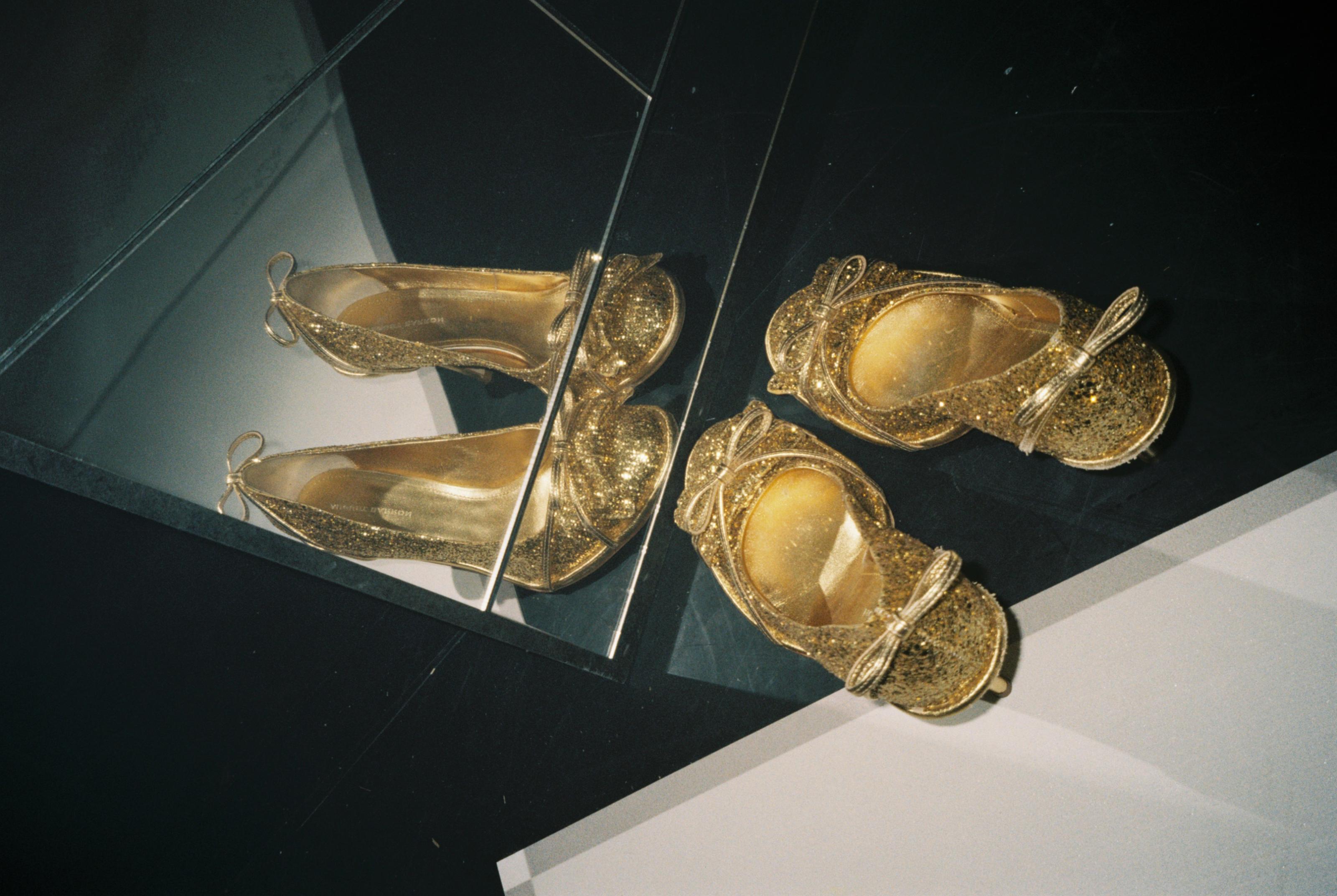
Estefanía: Differently from how we have worked before, all the aesthetic world we build was also really important to us. That costumes, scenography and imaginaries would help create the full picture and that the responsibility doesn't necessarily rely only on the body and movement.
And what role do the costumes and all the extra accessories and scenography play?
Luisa: I would say that this piece was a lot of world building and a negotiation of like how much to reenact an actual Quinceañeras party, how loyal to stay to the tradition but also to make it accessible for people that are not familiar with the tradition. Manuela Vilanova Piñón, our scenographer, was together with us throughout the process. And we were really trying to thread the movement material around the scenographic material.
Estefanía: Yes, and I think a very important point is that we proposed this project as a kind of cross-pollination. We are both Colombians, but we've been a decade in Europe and in a way became dancers and artists here. Also, the tradition of Quinceañeras is inherited from ballroom and debutante balls in Europe, so it's already a reappropriation by Latin American culture of something that was brought in by the colonizers. We are playing with that, with the literality and thinking about how to twist the narrative.
Would you say you are creating a new ritual with the performance?
Luisa: In a way yes, we looked back at something we inherited and asked ourselves how to belong to that, in the context that we’re living in, deciding what things from it still resonate with us and what we still want to honor and cherish and which things we would like to be different. And at the end we found our own way to approach this tradition, to rewrite it.
Estefanía: And we're also just very captivated by the theatrical potential of the party. So in a way we're creating our own version of the Quinceañeras party, which has rituals in it, but it has also been a theatrical and performative exploration of how far, how minimal, how different can these rituals be performed in a theater, for a European audience.
Do you want to talk more about how this piece relates or to your own coming of age story?
Luisa: While writing the concept for Quinceañeras, we were very fascinated by the fact that neither of us had an actual Quinceañera and that maybe this has a lot of meaning for us right now, being in our 30s and basically role-playing to be Quinceañeras.
I was skipping my Quinceañeras party and instead, with the money that would have been invested in the party, I went on a trip with other Quinceañeras that also decided to do this more alternative version of a coming of age ritual, which was just two weeks of traveling.
Estefanía: Because I was quite a bit younger than my classmates, I went to a lot of Quinces when I was 13 and you have to wear dresses and make-up and heels so it was a very pre-mature experience. I did have a kind of Quinceañeras, when my 15th birthday arrived my dad was really opposing to the fact that I would have a party, because also it costs a lot of money, so an aunty that lived like 10 hours away from my city said okay I can make the party for you but it has to be where I live. So I had a party but just with some family members and random friends, my community and my classmates weren’t there so it was a very deflated and very absent experience, a lot of empty chairs.
Luisa: Both of our experiences had a bit of absence, so it’s nice to try and find some sort of completion or to play out the fantasy of what our Quinceañeras nowadays could be, the one that we never properly had. For me it was important to also rely on the memory of having attended many many parties as a guest, like at least 30. Because in my class all the girls were turning 15, so you have this one year where every week there’s at least one party.
So it's exciting to create your own party now?
Luisa: My sister was the one inspiring me to go on a trip. She was the one escaping all sorts of femininity imposed on her. And she was the one discovering this alternative way to celebrate your 15th birthday. And I was the little sister just following her path, being like, yeah sure, that sounds cooler, I guess.
I mean, it does sound great to go on a trip.
Estefanía: It is, I think it is. I mean, it was that time. Right now, I don't know. Maybe a party is cooler again?
Luisa: There's something about embodying a princess that has always resonated with me, it just goes very well with my personality. There is some sort of regret inside of me for not having some princess looking pictures.
As a last question, how would you want the audience to leave your piece? What thoughts or feelings do you want to provoke?
Estefanía: We've talked a lot about generating emotions on a very simple level, to generate intimacy and closeness through the commitment of being together and creating a space of care. There are so many layers, and they're crafted with so much detail and love that I just wish people can leave feeling tenderness and joy... it has also many funny moments. I hope that we achieved a very relatable and accessible work and that it touches people in many different colors.